Bounce Rate Thresholds and List Hygiene Protocols for Cold Email
Keep bounce rates below 2% or lose inbox placement entirely.

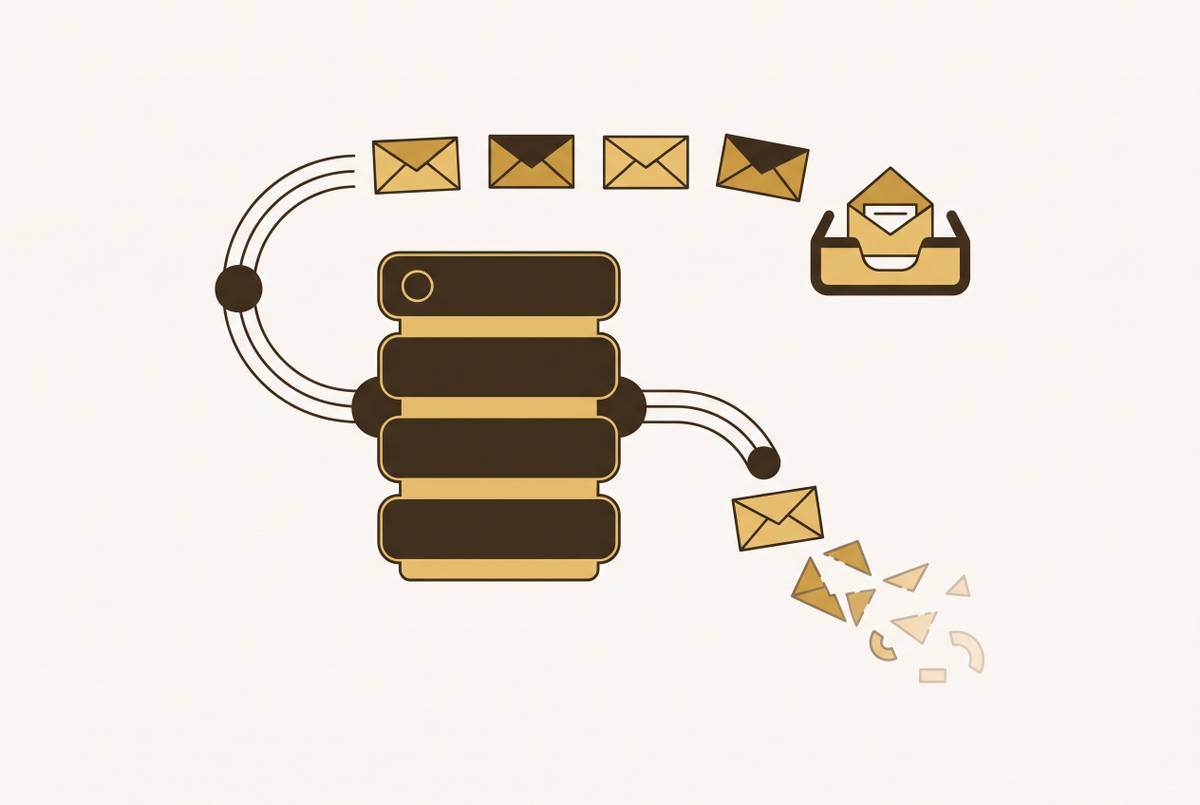
Cold email bounce thresholds in 2026 are enforcement gates. To stay below them, teams need a structured pre-send hygiene protocol that they use for as long as they send. Reactive cleanup can remove bad addresses, but it cannot prevent the reputation damage already caused by sending to them.
Why bounce rate became a hard gate in 2026, not a soft guideline
The enforcement shift is from temporary 4xx errors that allow retries toward permanent 5xx rejection, with temporary errors still part of the failure picture. Autobound’s 2026 cold email guide says that, as of November 2025, Gmail rejects non-compliant messages. Microsoft began enforcing the same rules for Outlook.com, Hotmail, and Live.com in May 2025. Rejection prevents the pitch from reaching a reader. Even good copy cannot help a message that fails to get through.
Supered’s 2026 guide describes Gmail, Yahoo, and Outlook as a doorman checking ID, the guest list, and the incident book. Message delivery depends on authentication, list quality, and sending reputation. Bulk-sender status also persists once a sender qualifies. The 5,000-message threshold is easier to cross when follow-up sequences are counted across all sending domains, and one busy campaign day can lock in stricter rules. Consequently, sending first and cleaning after the bounce report puts enforcement ahead of correction.
What the threshold tiers actually mean and where the real danger line sits
The operating distinction is between a sustainable target, a warning tier, and a danger threshold. The target for keeping a program healthy over the long term in 2026 is under 1% per inbox per day, and 2% is the danger line. The warning tier is the space in which a worsening rate requires intervention before that boundary is crossed. The trigger is not the operating target. A program run close to the danger line has little room for stale addresses or delayed bounces.
Amplemarket’s 2026 benchmark page describes bounce rate as the highest-leverage metric because each bounce degrades the reputation that governs delivery of the remaining mail. The damage compounds. Bounce rate is evaluated per mailbox and per domain, so one mailbox’s bad week can affect other mailboxes sharing its domain. Campaign averages can therefore obscure the source of deterioration. Measurement has to follow the units on which reputation is judged.
The same benchmarks identify the spam complaint ceiling as a hard, externally enforced rule, with rising bounces serving as a leading indicator of complaints to follow. Deteriorating list quality can begin with delivery failures and progress toward the hardest enforcement actions as complaints rise. The practical conclusion is to operate below the sustainable target and respond to trends early. Waiting for 2% treats the enforcement trigger as permission to accumulate damage.
Why lists decay structurally, making a one-time clean insufficient
B2B contact lists decay through job changes, domain retirements, company closures, and inbox provider policy changes. An address that was valid at acquisition can become invalid before activation. Most data providers refresh records monthly to quarterly, leaving a gap between a record’s last update and its validity when a message is sent. Verification at purchase cannot close that gap indefinitely.
Litemail’s 2026 guide explains the receiving server’s perspective through the currency of the sender’s data. Legitimate senders have relatively current contacts and few invalid addresses, while high bounce rates suggest scraped, purchased, or unmanaged lists. The guide also connects poor list quality with spam trap hits, which can contribute to a Spamhaus listing with other poor sending practices. Listings typically reflect patterns of abuse rather than one hit, and a DBL listing can impair placement across many major providers. Quarterly cleaning needs to be supplemented by ongoing verification, including re-verification before reactivating any list not used recently.
The catch-all address problem that standard verification misses
Catch-all domains separate server acceptance from mailbox existence. They accept incoming mail at the server level whether or not the specific recipient exists, so a verification tool may return “Valid” or “Catchall” without establishing that the address reaches a real user. That distinction is easy to overlook operationally.
The dangerous part is the delayed bounce. A campaign can appear to finish at an acceptable rate, only for catch-all servers to respond days later and push it beyond 2%. Standard verification cannot resolve that uncertainty in advance. Litemail classifies NeverBounce catch-all results as “risky — send cautiously or skip”, while MailTester’s 2026 guide identifies catch-all domains as a distinct cause of delivery failure. The apparent success at send time is therefore not a reliable final result.
MailTester also flags role-based addresses such as info@, admin@, sales@, and support@ because they may be deactivated, unmonitored, or disconnected from an individual user. These require a separate suppression decision from catch-all classification. For catch-alls, the aggressive approach is to isolate the segment, track its bounce rate, and suppress it if it exceeds a defined threshold. For most cold email operations, the decision rule is to skip catch-alls when in doubt.
The pre-send verification stack: what a structured hygiene protocol actually covers
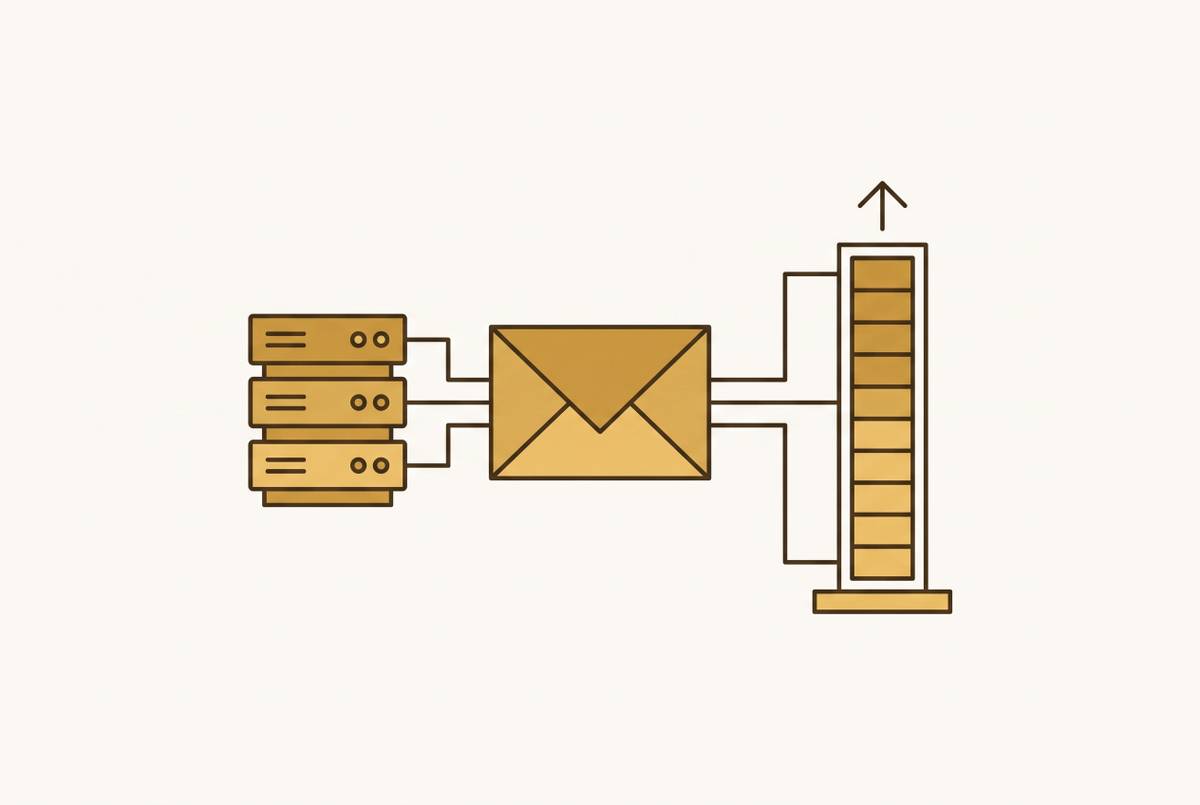
A team implementing this protocol should begin with syntax checks, removing malformed addresses before querying a mail server. Domain and MX checks come next because a correctly formatted address is unusable if its domain does not exist or lacks active mail exchange records. Mailbox-level verification then tests whether the specific address exists without sending a real email. Each stage establishes the premise for the next. There is little value in testing a mailbox before establishing that its domain can receive mail.
Catch-all classification follows because an accept-all response can undermine the apparent certainty of the mailbox check. The conservative rule is to suppress those addresses rather than interpret acceptance as proof of existence. Role-based removal then excludes patterns such as info@ and support@, followed by removal of known disposable or temporary email domains. Duplicate suppression is the last step across lists and campaigns. It keeps the same bad address from causing repeated bounce signals when it appears more than once in the sending pipeline.
Litemail names NeverBounce and ZeroBounce as baseline verification tools. MailTester says its bulk verification finds invalid and risky addresses and checks for catch-all status, disposable domains, and role-based patterns. These are optional tools. The workflow needs to cover the full sequence and act on risky classifications. MailTester also names integrations with HubSpot, Klaviyo, and SendGrid, illustrating how verification can operate inside an existing sending stack.
Amplemarket places verification before an address ever enters a sequence, making acquisition the first control point, ahead of campaign launch. Lists that have gone unused need re-verification, and high-volume programs should shift from quarterly batches to checks every week or in near-real-time. Litemail is explicit that hard bounces must never be retried because retries deepen reputation damage. Every hard bounce must therefore be suppressed at once and for good.
How sending infrastructure settings interact with list hygiene to determine actual inbox placement
A verified list cannot compensate for a misconfigured sending domain. Supered establishes that Gmail, Yahoo, and Outlook check SPF, DKIM, and DMARC before evaluating list quality, so weak authentication can penalize delivery even when the addresses are clean. MailTester likewise identifies misconfigured DNS as a source of bounce risk independent of list quality. Both systems constrain the same delivery outcome. Cleaning addresses does not repair authentication, and fixing authentication does not make invalid mailboxes usable.
The practical infrastructure model is to keep cold outreach off the main sending domain. Supered recommends secondary domains with separate mailboxes, each configured with SPF, DKIM, and DMARC, followed by warmup before outreach volume begins. New domains and mailboxes need a ramp. Warmup is a prerequisite rather than an optional enhancement to a verified list. Daily volume per mailbox must also remain within documented safe limits, because excessive volume amplifies the reputation signal from bounces.
Amplemarket argues that performance benchmarks are misleading without the deliverability conditions stated next to them. The same copy can produce materially different open and reply rates depending on warmed domains, mailbox rotation, inbox-placement testing, and verified data. A weak reply rate cannot be interpreted solely as a copy or targeting problem when inbox placement is impaired. A team that verifies its list but skips domain isolation and warmup is solving only half the problem.
What reactive cleanup looks like after the threshold is crossed, and why it is the slower path
Reactive cleanup begins with work the pre-send protocol could have completed before exposure. MailTester recommends real-time verification of the full list to remove invalid and risky addresses, followed by checks of the sending domain against known blocklists. Spamhaus has public reputation data that teams can use for these checks. Authentication also needs review if DNS configuration contributed to the failure. At the most severe tier, the required response can be rebuilding the list from scratch.
Volume must be built back up slowly, and it takes clean sending over a long period to repair reputation before inbox placement recovers. During that interval, cold outreach pipeline is paused or degraded. If rising bounces are followed by complaints that also cross the enforced limit, the program enters the hardest enforcement category, where action is automatic and not subject to appeal. Recovery is possible, but it adds reputation repair and constrained sending to the verification work that was needed anyway.
Treating hygiene as a continuous operating condition, not a pre-launch task
The operating cadence follows from the mismatch between continuous decay and delayed correction. Verification belongs at acquisition, re-verification belongs before reactivation, and weekly bounce monitoring belongs at mailbox and domain level across campaigns. The target is under-1% per inbox per day. Weekly review must therefore track that daily measure closely enough to expose deterioration before a threshold crossing.
Amplemarket identifies proactive spam checking and clean, verified targeting as the controls that help programs stay below the complaint ceiling. Bounce monitoring after the fact is insufficient. Monitoring detects deterioration, while pre-send checks reduce the chance that risky addresses enter the sequence at all. API-level verification inside the CRM or sending stack makes it easier to keep doing that work than exporting lists by hand each time.
Compliant sending in 2026 requires deliverability infrastructure. A program must keep address validity, suppression, authentication, warmup, and volume control working together as its data changes. Launch approval is only a starting condition. Hygiene is not something completed before a campaign, but an operating condition the sending program must continuously maintain.