Multi-Channel Outbound Sequence Design for B2B SaaS Pipeline
Coordinated email, LinkedIn, and phone touches outperform isolated channels.
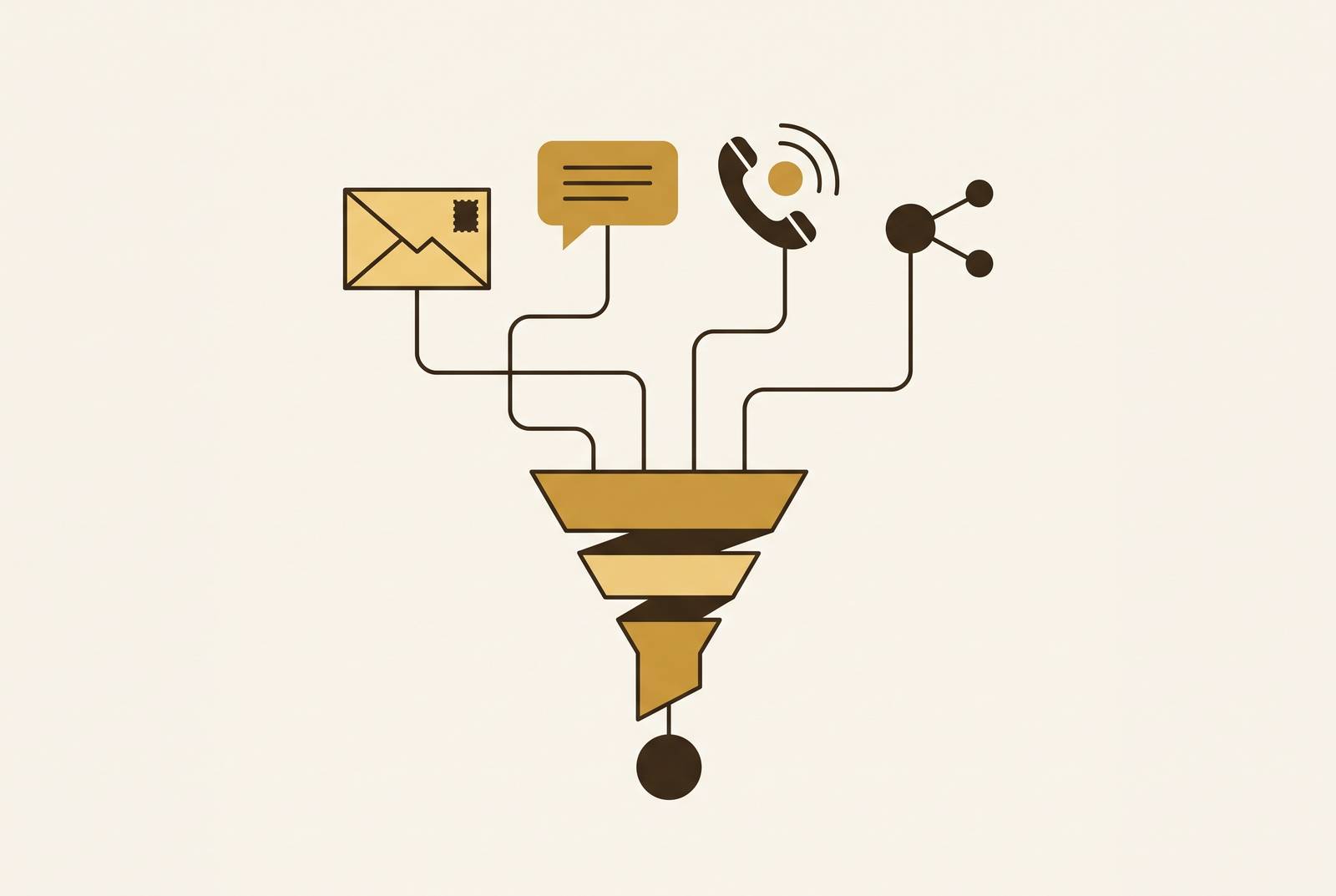
A buyer who gets an email on Monday, a LinkedIn request on Tuesday, and a cold call on Thursday has not been pursued by one seller building a case. That buyer has met three strangers who happen to work for the same company. This is the actual failure mode behind most "multi-channel" B2B outbound programs today, and it explains why adding channels, by itself, does not fix a sequence that isn't converting.
Most teams that claim to run multi-channel outreach are running two parallel campaigns out of two separate tools, pinging the same contacts independently of one another, and getting replies in neither. The buyer feels no coordination, because there is none on the sending side. The environment has also made the old fallback, more email, considerably more dangerous: deliverability rules tightened hard after Microsoft started enforcing its bulk-sender requirements in May 2025. A sequence that leans on email volume to compensate for weak coordination is now actively damaging the sending domain. The instinct to add touches needs to be replaced with the discipline to link the touches that already exist.
Why the Order Is Not Interchangeable
Email, LinkedIn, and phone are not three pipes that carry the same message to different inboxes. Each one does a specific job, and a sequence that treats them as interchangeable ends up feeling random to the person receiving it.
Email is the volume and documentation channel. It scales further than the other two, it's trackable at every stage (open, click, reply), and it reaches almost every buyer because work email is still where business gets transacted. It functions as the written record the rest of the sequence can point back to. Phone is re-emerging as the channel that actually creates meetings, with email and LinkedIn doing the work of making that call land as informed outreach. A call placed after a prospect has already opened an email and seen a LinkedIn profile is a different event than a call placed cold, even though the script might be identical.
The order these channels run in is not a style choice. Leading with email, following with LinkedIn engagement, and closing with phone outperforms the reverse: flipping the order so phone comes first drops total cadence performance, because an interruption with no prior context reads as intrusive. Email and phone-first sequencing are worth skipping for most B2B programs. One more constraint belongs here: LinkedIn rate-limits aggressively, and pushing automation too far on that channel risks account restriction that can take LinkedIn out of the sequence. Manual or lightly automated social steps, run with guardrails, are the safer path, even though they take more rep time than a fully scripted sequence would.
A step-by-step sequence architecture that builds one conversation across channels
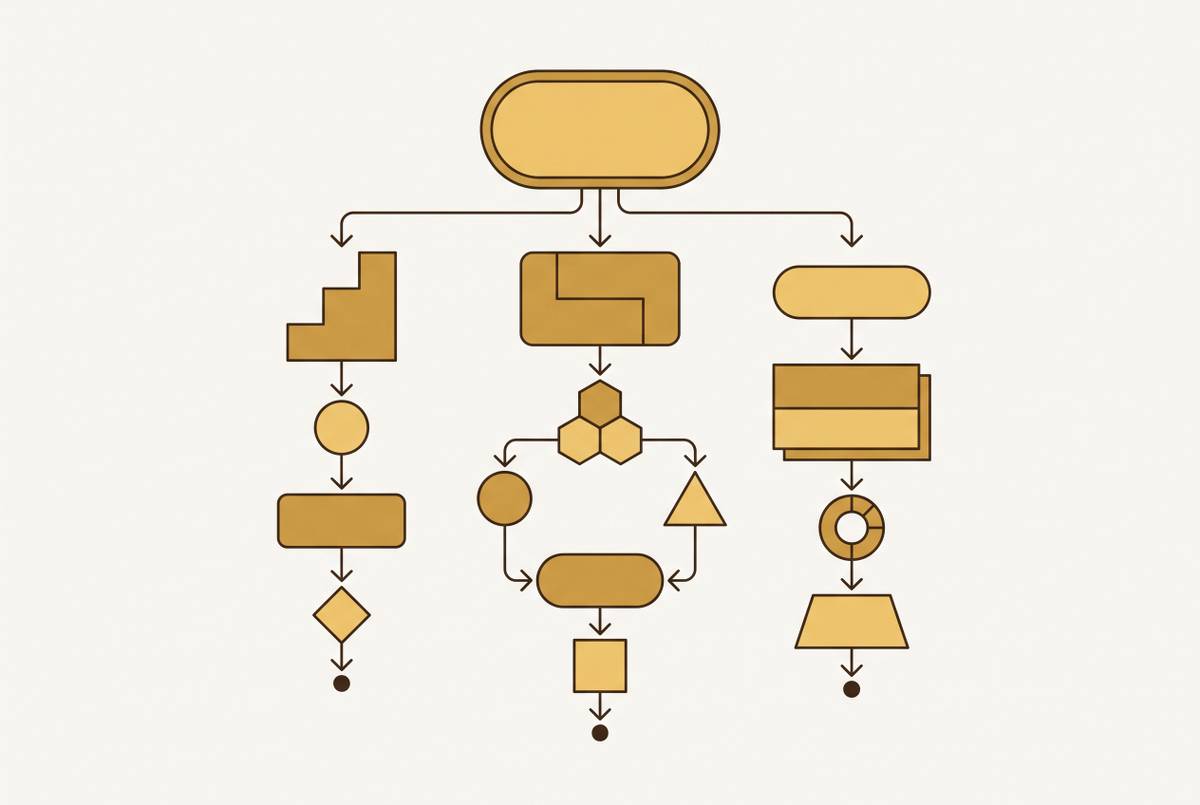
The architecture that actually converts is a narrative where every message names, explicitly, what came before it, so the buyer experiences one escalating conversation instead of a string of unconnected contacts from the same company.
A representative structure starts with a cold email that opens the sequence, built on specific, researched context rather than a category-level line like "I saw you work in SaaS." By Day 4, if the prospect has accepted a connection, a LinkedIn message follows, carrying value, a relevant insight or piece of content, not a pitch ("Following up on the note about [specific workflow]..."). That message deepens a relationship the email already started. Day 10 brings a second LinkedIn touch, this time engagement rather than outreach: a comment on the prospect's own content, or a share of something tied directly to a priority they've stated publicly. The goal of that message is goodwill.
Once email and LinkedIn are already working together as a base pairing, phone can enter the sequence for the highest-value tiers. A call placed after an email open or a LinkedIn profile view carries context the prospect can recognize. The specific day-by-day spacing above is a reference model, not a fixed script: account tier, covered next, compresses or extends that timeline substantially.
Two points about message construction carry as much weight as the sequence shape itself. ROI language in a first-touch cold email measurably hurts outcomes. The first email's job is to earn the next touch, not to close anything. Messages anchored to a specific, real event in the prospect's world, a deadline, a product launch, a funding round, consistently beat generic problem-statement hooks, because they read as informed.
How account tier and ACV should govern sequence length, touch investment, and personalization depth
Personalization lifts reply and conversion rates a lot, but as depth increases, the cost of producing it rises faster than the lift does. That tension is the real constraint on sequence design, and annual contract value is the input that should resolve it.
For high-ACV accounts, above whatever threshold a given company considers a meaningful deal, a longer, fully multi-channel sequence with deep per-account research, specific trigger references, and personalized video is justified, because the economics of the deal cover the cost of producing all of that. Lower-ACV or self-serve accounts are better served by a shorter, email-led sequence pointed at a free trial or a demo booking, because at that deal size, deep personalization costs more than it returns.
This maps onto a three-tier structure. The resulting range, 8 to 18 touches spread over 2 to 6 weeks, isn't an arbitrary spread; it maps directly onto which of these three tiers an account falls into.
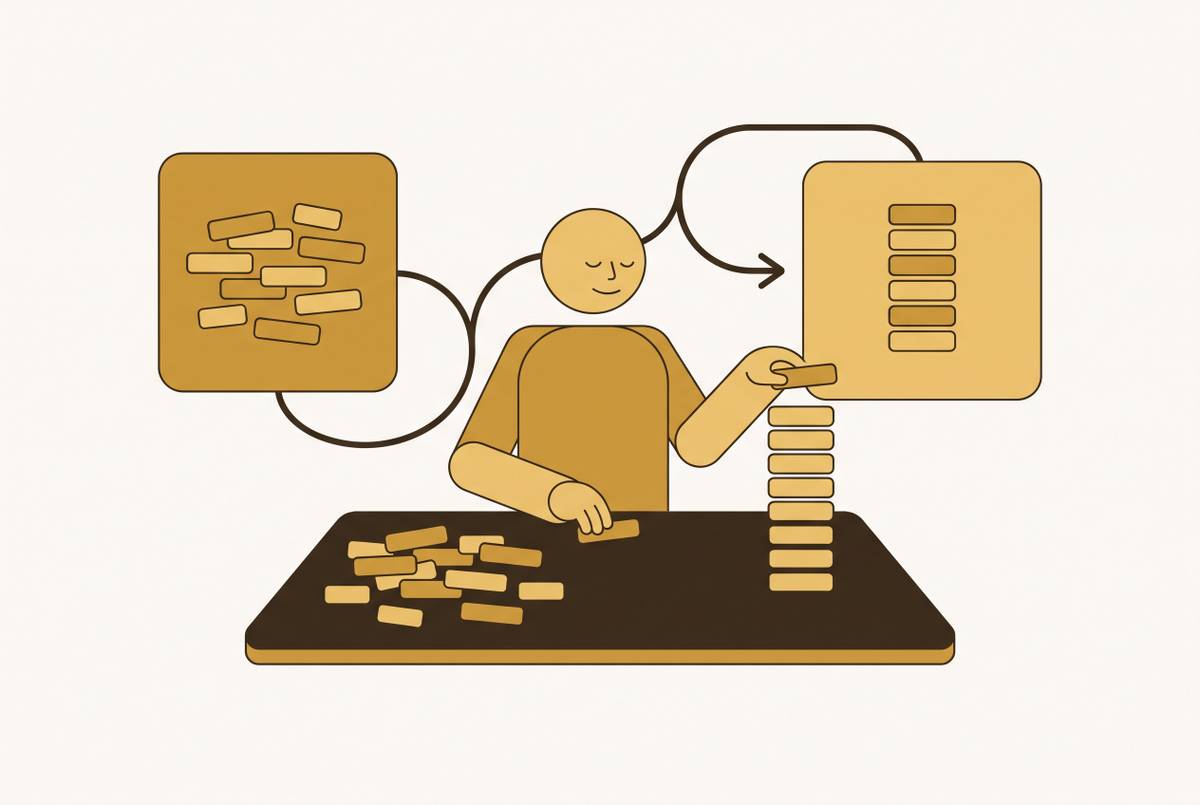
Segmentation has to happen before any copy gets written. Writing outbound messaging before the segments are defined produces a sequence calibrated to nothing in particular. One more point favors precision over scale: small, carefully targeted lists consistently produce higher reply rates than the same message blasted to a much larger pool. The instinct to widen a list for more volume usually works against the sequence.
Product-led growth companies running a sales layer on top of self-serve have a distinct version of this problem worth a brief note. There, the highest-value outbound targets are existing free or trial users who already show engagement: heavy usage, adoption of a key feature, a team invitation sent. That data lets the sequence reference the prospect's own behavior in the product rather than inferring interest from firmographics alone, which makes it a warm motion rather than a cold one even though it still runs through an outbound sequence.
Signal-based triggers that tell the sequence when to fire, accelerate, or branch
A sequence triggered by a real buying signal behaves differently from one paced by a calendar, because the message arrives while the event that prompted it is still live, and the first line can name that event directly. That specificity is a large part of why signal-triggered outreach outperforms calendar-paced outreach on reply rate.
Several signal types have proven especially useful for B2B SaaS outbound. Intent data and content engagement, repeat pricing page visits, a surge in topic consumption, traffic on G2 or Capterra, are the visible footprints of a buying journey that would otherwise stay invisible until the prospect reaches out directly.
Signal-based selling is the real shift in how modern B2B outbound gets targeted. Instead of working from static ICP criteria alone, teams layer behavioral and contextual triggers on top of firmographic fit, so they can reach prospects at the actual moment of intent. That gives the ICP three layers: firmographic fit, which is table stakes; behavioral signals, which supply timing; and contextual triggers, which supply relevance. Accounts hitting all three get priority sequencing. Two stacked signals are a reason to act today.
Signals only pay off if the sequence can respond to them inside the window they open. A prospect who views a sender's LinkedIn profile on Day 3 of a planned 14-day sequence should get a phone call that same week, not wait for the calendar default to catch up. Speed to signal affects outcomes directly: a triggered sequence launched a week after the event that caused it lands in a cooled context, while one launched while the need is still live reads as well-timed. The sequence architecture built earlier in this piece is the structure; the signal layer is what keeps that structure from feeling mechanical.
The operational infrastructure that makes cross-channel message linkage executable at scale
True multi-channel coordination is rare because of operational reasons, not strategic ones. Data has to stay unified across every channel in use, each channel needs visibility into what happened on the others, and the sender's identity, email signature, LinkedIn profile, phone caller ID, has to resolve to the same recognizable person. If no orchestration layer carries that information across channels, the same contact gets emailed and LinkedIn-messaged on the same day with two unrelated generic notes, and neither gets a reply.
Three requirements make linkage work in practice. The sequence tool needs a unified record of contact status: did the prospect reply to the email, accept the LinkedIn connection, pick up the phone, watch the video? If that state does not carry across channels, the rep and the next automated touch have nothing to reference. Sender identity needs to be consistent: a prospect who gets a cold email from one name and a LinkedIn request from a different name or company page on the same day reads both as automated noise. And deliverability hygiene, SPF, DKIM, and DMARC alignment, capped daily send volumes, multi-domain sending infrastructure, now functions as a baseline requirement for inbox placement.
The stack that has emerged to support this runs waterfall enrichment into signal-aware copy generation into a sequencing platform, with the human SDR reviewing a prioritized queue. Amplemarket sits in this category as a platform built specifically to unify the data and execution layer the architecture in this piece depends on: tracking contact status across email, LinkedIn, and phone in one place, and keeping sender identity consistent across channels so that cross-channel referencing is something the sequence can actually execute rather than something a rep has to track by memory across three separate tabs. Unify, a warm outbound automation platform that raised a Series B in July 2025, takes a related approach, positioning itself as a "system of action for growing revenue" by pulling intent data from multiple sources, running AI research agents, and triggering sequences automatically when signals fire; its customers include Perplexity and Cursor.
How much autonomy to hand that stack is a live and unresolved question among practitioners. For deals above a meaningful ACV threshold, even a small improvement in reply rate from a handwritten, human-reviewed email justifies the extra effort over a fully automated alternative. AI assistance inside SDR workflows is now standard practice, but handing a sequence full autonomy is a separate decision with a different risk profile, particularly on LinkedIn, where rate-limiting and account restriction risk climb with every additional layer of automation.
How to measure whether the sequence is working as a conversation rather than three parallel campaigns
You should not evaluate a multi-channel sequence by counting activity by channel. It's checking whether the buyer's path through the sequence shows accumulation: do later touches convert better than the first one, do messages that reference earlier channels get better replies than those that don't, do engaged accounts move through the sequence faster than disengaged ones?
Four metrics do most of the work here. Reply rate by touch number should hold up or climb through touches three to six, because a well-built sequence does not live or die on the first message. Channel contribution to meetings booked shows which paths function as coordinated conversations rather than coincidental overlaps: tracking which combinations, email-then-phone, LinkedIn-then-email, all three together, actually produced held meetings. And sequence exit reason, a positive reply, a negative reply, or no reply at all, tells teams where the problem actually sits: sequences that run out every touch without a reply point to bad targeting or bad timing rather than bad copy, while sequences with a high rate of negative replies point to the right person being reached at the wrong moment or with the wrong angle.
The Bridge Group's survey of 351 B2B companies, 83% of them B2B SaaS, gives a useful external reference point here: the strongest SDR teams generate substantial pipeline per rep per quarter, with a meaningful share of meetings converting into real opportunities. The data from these metrics should feed straight back into tier calibration. If signal-triggered sequences are outperforming calendar-paced ones by a wide margin, that tells a team exactly where to move rep time next quarter.
A sequence built correctly shows accumulating signal across these numbers: each touch performing a little better because of what came before it, each channel reinforcing the others. A sequence that isn't built this way will show flat or declining engagement no matter how many touches get added to it, because more touches without linkage just means more noise delivered on a longer schedule. The question was never whether to run ABM, demand generation, or broad-based outbound, but which accounts get which treatment, and measurement keeps that answer accurate as signals, tiers, and market conditions keep shifting underneath it.